Few bands transformed the live concert experience as profoundly as Queen. While countless rock groups could fill arenas, Queen mastered something even more ambitious: creating songs that thousands—and eventually hundreds of thousands—of people could sing, clap, stomp, and celebrate together.
Long before interactive live performances became common, Queen understood that a concert wasn’t simply about performing songs. It was about creating a shared experience between the band and the audience. Through unforgettable choruses, simple yet powerful rhythms, and Freddie Mercury’s unmatched stage presence, Queen helped redefine what stadium rock could be.
Their music wasn’t just written to be heard—it was written to be experienced by massive crowds.
The Birth of Stadium Rock
By the mid-1970s, rock concerts were becoming larger than ever before. Advances in sound systems and lighting allowed bands to perform in arenas and outdoor stadiums, reaching audiences far beyond traditional concert halls.
Many artists simply played louder to accommodate larger venues.
Queen took a different approach.
Rather than adapting existing songs to fit bigger stages, they began writing music specifically designed for large audiences. Every chorus, rhythm, and musical pause became an opportunity for crowd participation.
This philosophy would become one of the band’s defining characteristics.
Writing Songs Everyone Could Join
One of Queen’s greatest strengths was their understanding of audience psychology.
They recognized that people attending concerts wanted more than impressive musicianship—they wanted to feel like part of the performance.
To achieve this, Queen wrote songs featuring:
- Memorable choruses
- Repetitive lyrical hooks
- Strong rhythmic patterns
- Simple call-and-response moments
- Easy-to-follow melodies
These elements allowed entire stadiums to participate regardless of musical ability.
The result was a concert atmosphere unlike anything audiences had experienced before.
“We Will Rock You”: Simplicity That Changed Everything
Perhaps no song better illustrates Queen’s stadium philosophy than “We Will Rock You.”
Unlike many rock songs built around complex instrumentation, this anthem relies primarily on a simple rhythm:
Stomp. Stomp. Clap.
The pattern is instantly recognizable and requires no musical training to perform.
Brian May has explained that the song was inspired by audiences who continued singing after Queen’s concerts had ended. The band realized fans wanted to participate rather than simply applaud.
Instead of filling the arrangement with instruments, Queen intentionally left space for the audience.
That decision transformed “We Will Rock You” into one of the most recognizable crowd anthems in music history.
The Perfect Companion: “We Are the Champions”
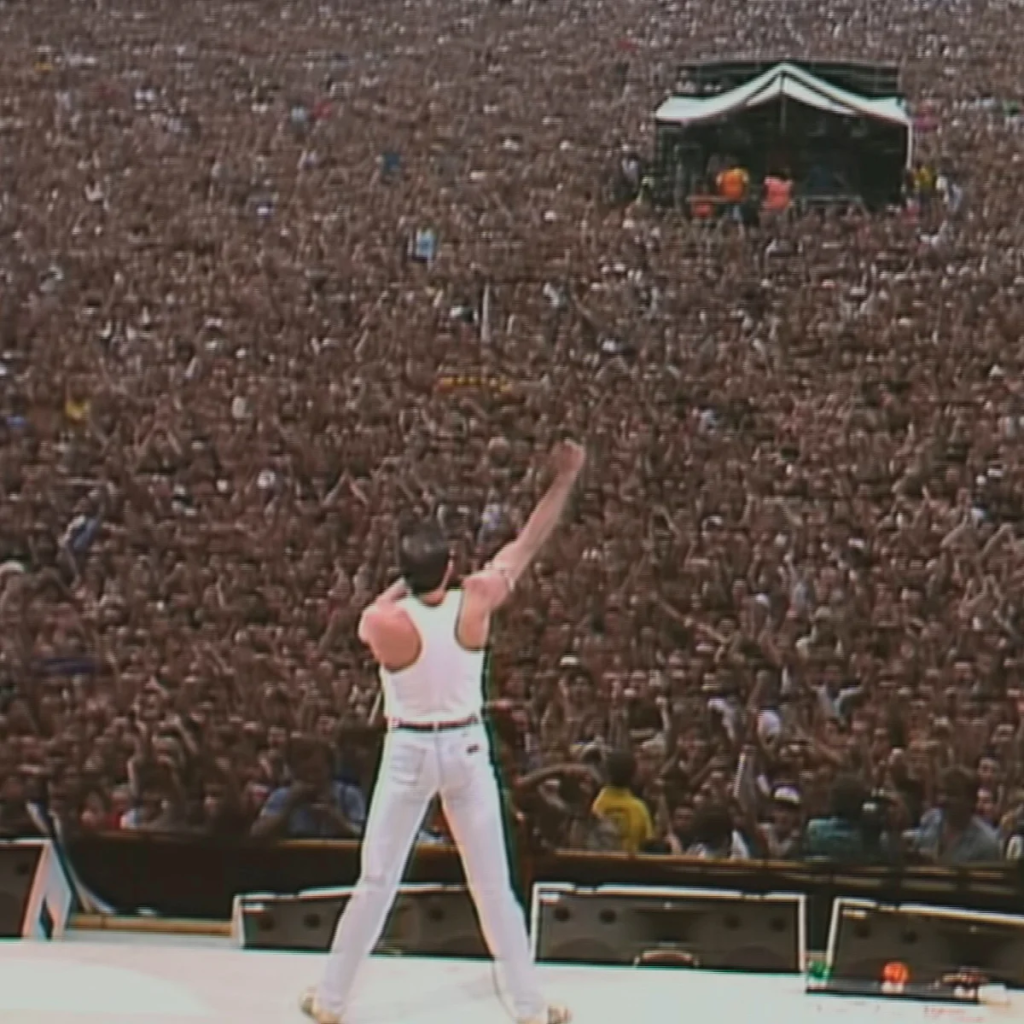
Released alongside “We Will Rock You” on the album News of the World, “We Are the Champions” completed one of rock’s most iconic pairings.
Where “We Will Rock You” built anticipation through rhythm, “We Are the Champions” delivered emotional release.
Its soaring chorus invited thousands of voices to unite in celebration.
The song’s themes of perseverance, resilience, and triumph made it universally relatable.
Today, it remains a fixture at:
- Championship celebrations
- Sporting events
- Graduation ceremonies
- Public celebrations
- Live concerts
Its enduring popularity demonstrates Queen’s ability to write music that transcends its original context.
Freddie Mercury: The Ultimate Crowd Conductor
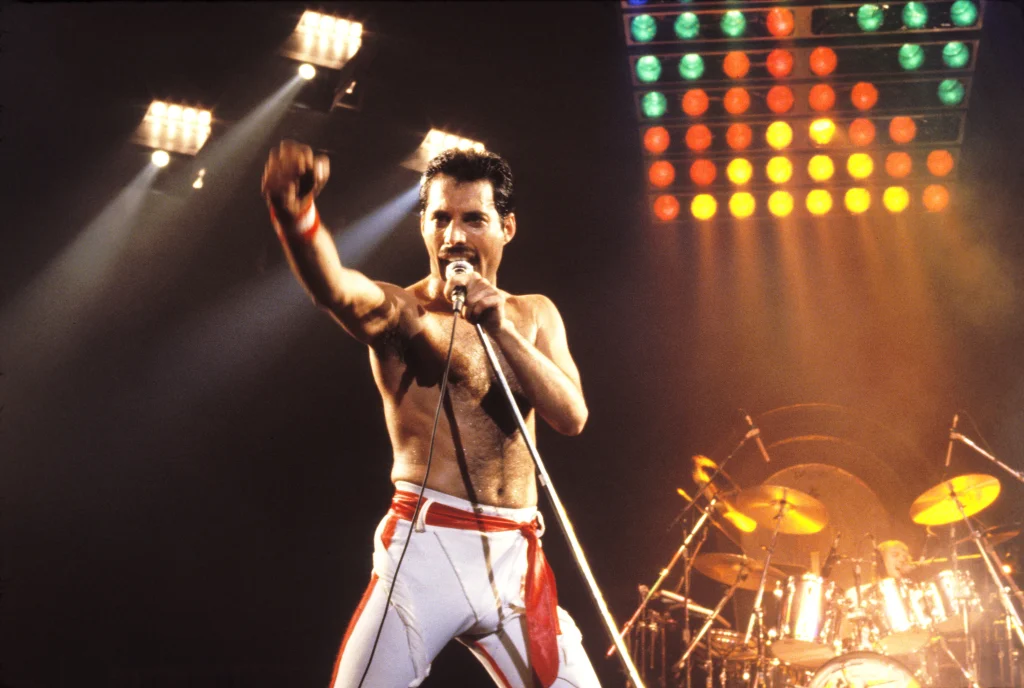
While Queen’s songwriting laid the foundation for stadium rock, Freddie Mercury elevated it to another level.
Few performers possessed his ability to engage enormous audiences with such ease.
Rather than standing behind a microphone, Mercury treated every concert as an ongoing conversation with the crowd.
His performances often included:
- Call-and-response vocal exchanges
- Improvised audience singalongs
- Extended vocal improvisations
- Playful interactions
- Encouraging crowd participation
One of his signature moments involved leading audiences through increasingly complex vocal phrases, with tens of thousands of fans responding in perfect unison.
These spontaneous interactions became highlights of Queen’s concerts and demonstrated Mercury’s extraordinary charisma.
Creating Songs with Live Performance in Mind
Unlike many studio-focused bands, Queen frequently considered how songs would translate to the stage during the writing process.
They understood that certain musical qualities worked exceptionally well in large venues.
Their stadium-friendly songs often featured:
Massive Choruses
Songs like “Radio Ga Ga,” “I Want It All,” and “Hammer to Fall” featured choruses that audiences could quickly learn and enthusiastically sing together.
Memorable Rhythms
Simple but powerful rhythmic patterns encouraged clapping, stomping, and movement throughout performances.
Dynamic Build-Ups
Queen mastered musical tension.
Many songs gradually built toward explosive choruses, making the audience’s participation feel even more rewarding.
Emotional Themes
Rather than relying on abstract lyrics, Queen often explored universal emotions such as hope, determination, love, celebration, and resilience.
These themes resonated with listeners regardless of language or culture.
“Radio Ga Ga” and the Power of Collective Movement
One of Queen’s most visually striking concert moments came during performances of “Radio Ga Ga.”
The song’s chorus inspired synchronized clapping above audience members’ heads, creating an unforgettable visual spectacle.
Thousands of fans moving together transformed the performance into something larger than the music itself.
The moment demonstrated another key principle of Queen’s stadium approach:
Participation creates lasting memories.
Instead of merely watching the band, audiences became active contributors to the performance.
Musical Simplicity Without Losing Sophistication
Although Queen often embraced accessibility in their stadium anthems, their music remained musically rich.
Behind seemingly simple choruses lay intricate arrangements featuring:
- Layered vocal harmonies
- Sophisticated guitar orchestration
- Dynamic tempo changes
- Thoughtful production
- Carefully balanced instrumentation
This combination allowed casual listeners to enjoy the songs immediately while rewarding longtime fans with deeper musical complexity.
It was one reason Queen appealed to such a broad audience.
The Importance of Silence
One overlooked aspect of Queen’s songwriting was their strategic use of silence.
Instead of filling every moment with sound, the band frequently left intentional gaps where audiences could naturally respond.
Examples included:
- Clapping sections
- Vocal pauses
- Instrumental breaks
- Extended endings
- Audience singalong moments
These spaces encouraged interaction and made concerts feel collaborative rather than one-sided.
Live Performances Became the Standard
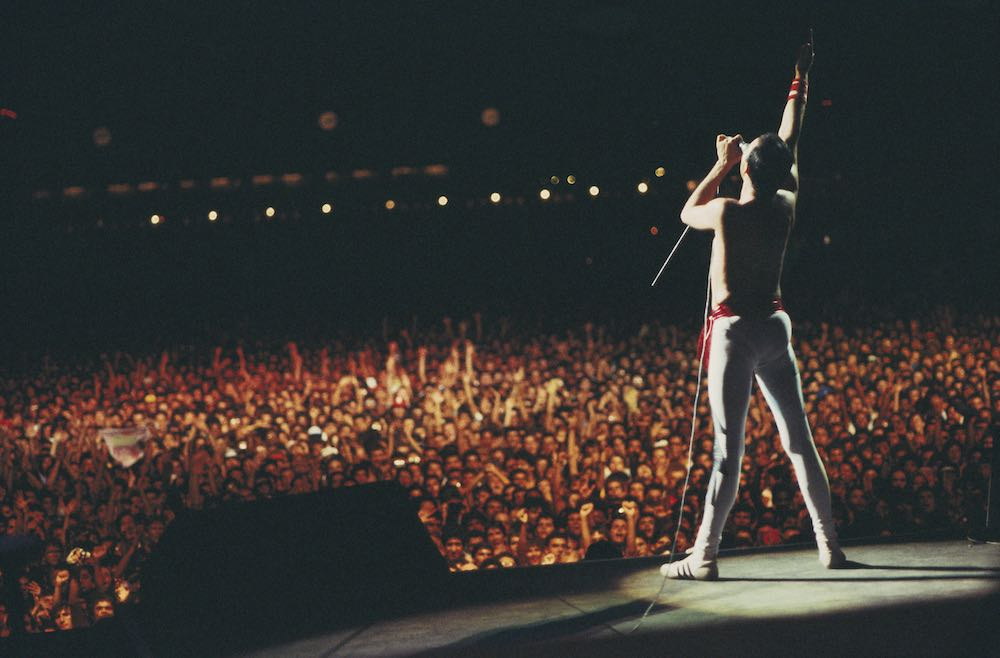
Queen’s legendary concerts demonstrated how effectively their songwriting translated to massive venues.
Whether performing in arenas, outdoor festivals, or packed stadiums, the band’s music consistently inspired enthusiastic audience participation.
Their performances became known for:
- Extraordinary energy
- Tight musicianship
- Audience engagement
- Emotional connection
- Memorable visual moments
Rather than simply reproducing studio recordings, Queen transformed each concert into a unique shared experience.
Influencing Future Generations
Queen’s approach to stadium rock has influenced countless artists across multiple genres.
Many modern performers now incorporate elements that Queen helped popularize, including:
- Interactive crowd participation
- Anthemic choruses
- Large-scale singalongs
- Audience call-and-response sections
- Songs designed specifically for live performance
Bands ranging from rock and pop to alternative and metal continue to draw inspiration from Queen’s understanding of what makes a concert unforgettable.
Their influence extends far beyond songwriting, shaping expectations for live entertainment itself.
Why Queen’s Stadium Songs Still Work
Decades after their release, Queen’s biggest anthems remain staples at concerts, sporting events, festivals, and public celebrations around the world.
Their enduring appeal comes from several timeless qualities:
- Universal themes that resonate across cultures
- Instantly recognizable melodies
- Rhythms that encourage participation
- Emotional authenticity
- A balance of simplicity and musical sophistication
These songs unite strangers in shared moments of celebration, proving that great stadium music is about more than volume or spectacle. It is about creating a sense of connection that everyone can feel.
A Legacy That Transformed Live Music
Queen didn’t invent stadium rock, but they redefined what it could achieve. By writing songs specifically for massive audiences, embracing crowd participation as part of the performance, and pairing unforgettable music with Freddie Mercury’s extraordinary stage presence, they elevated live concerts into communal celebrations.
Their greatest anthems continue to echo through stadiums, arenas, and festivals because they invite people to do more than listen—they invite them to take part. Whether stomping to “We Will Rock You,” singing the triumphant chorus of “We Are the Champions,” or clapping in unison during “Radio Ga Ga,” audiences become an essential part of the music itself.
That philosophy transformed Queen into one of the greatest live bands in history and left an enduring blueprint for stadium rock. Their concerts proved that the most unforgettable performances are not defined solely by the musicians on stage, but by the thousands of voices joining them in perfect harmony.