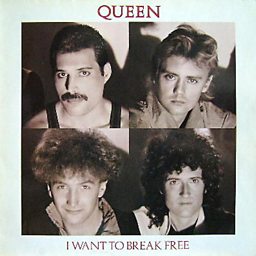
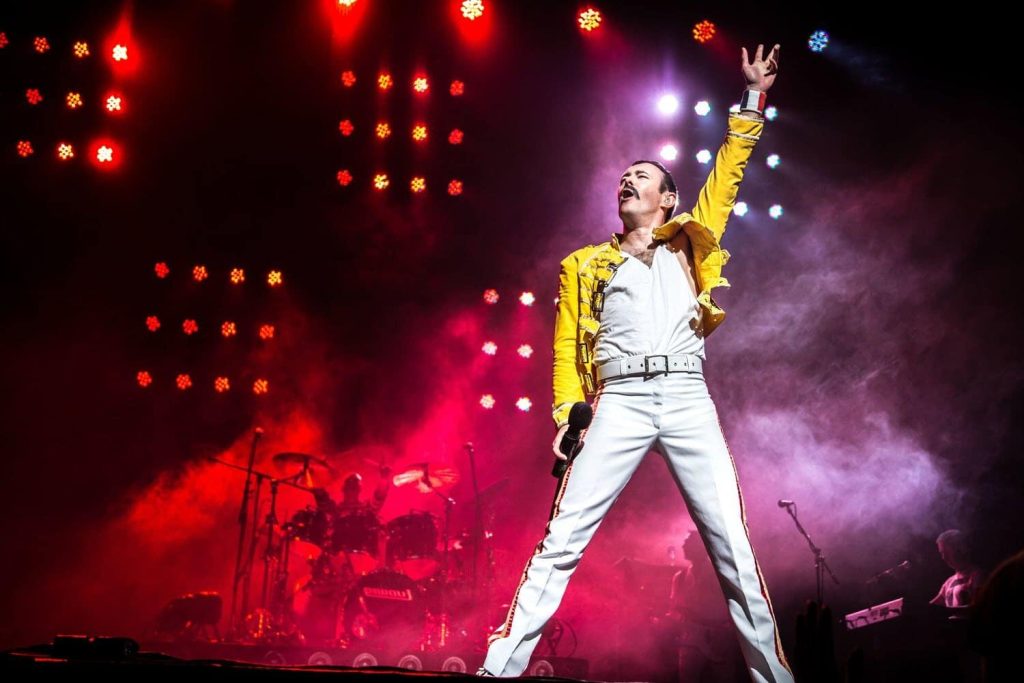
Queen built its reputation on the extraordinary chemistry between Freddie Mercury, Brian May, Roger Taylor, and John Deacon. Together, they created one of the most celebrated catalogs in rock history without frequently relying on outside collaborators. Unlike many bands that regularly featured guest artists, Queen preferred to keep its creative process within the group.
However, when the band or its members did collaborate with others, the results were often unforgettable. From legendary duets and influential producers to soundtrack projects and solo ventures, these partnerships expanded Queen’s musical horizons while introducing their music to new audiences.
Here’s a look at some of Queen’s greatest collaborations and the lasting impact they had on the band’s legacy.
David Bowie: Creating “Under Pressure”
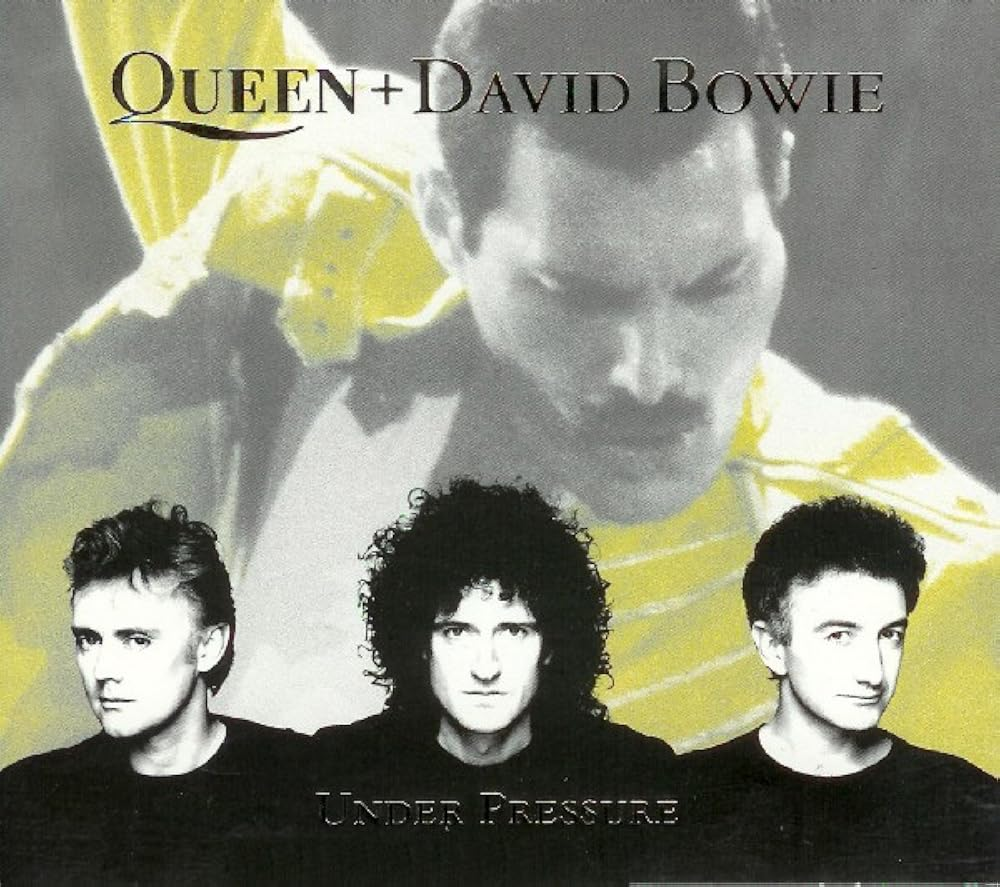
Perhaps no collaboration in Queen’s history is more iconic than “Under Pressure,” recorded with David Bowie in 1981.
The partnership came together almost by accident. Bowie happened to visit the recording studio while Queen was working in Switzerland, and what began as an informal session quickly evolved into one of rock’s greatest collaborations.
Rather than simply adding guest vocals, Bowie became an active creative partner, contributing lyrics, melodies, and ideas during the recording process.
The song’s unforgettable bass line, emotional vocals, and uplifting message helped make it an international hit.
Why It Worked So Well
- Freddie Mercury and David Bowie possessed dramatically different vocal styles that complemented one another.
- Both artists encouraged experimentation during the recording process.
- The song balanced emotional vulnerability with powerful energy.
- Its timeless message continues to resonate across generations.
Today, “Under Pressure” remains one of the defining collaborations in popular music.
Producer Roy Thomas Baker: Shaping Queen’s Early Sound
While not a performer, producer Roy Thomas Baker played a crucial role in Queen’s rise during the 1970s.
Working closely with the band on several landmark albums, Baker embraced their ambitious recording techniques rather than discouraging them.
His production style supported Queen’s signature elements:
- Massive vocal harmonies
- Layered guitar arrangements
- Experimental recording techniques
- Theatrical presentation
- Rich studio production
His work reached its peak with A Night at the Opera, helping transform ambitious musical ideas into polished recordings without sacrificing creativity.
Mack: Guiding Queen into the 1980s
As Queen’s sound evolved, producer and engineer Mack became an important collaborator.
Working on albums including The Game, Flash Gordon, Hot Space, and The Works, Mack helped the band embrace modern production techniques.
His influence supported Queen’s exploration of:
- Synthesizers
- Funk-inspired rhythms
- Electronic textures
- Cleaner studio production
- Contemporary pop influences
The partnership demonstrated Queen’s willingness to adapt to changing musical landscapes while maintaining their identity.
Freddie Mercury and Montserrat Caballé
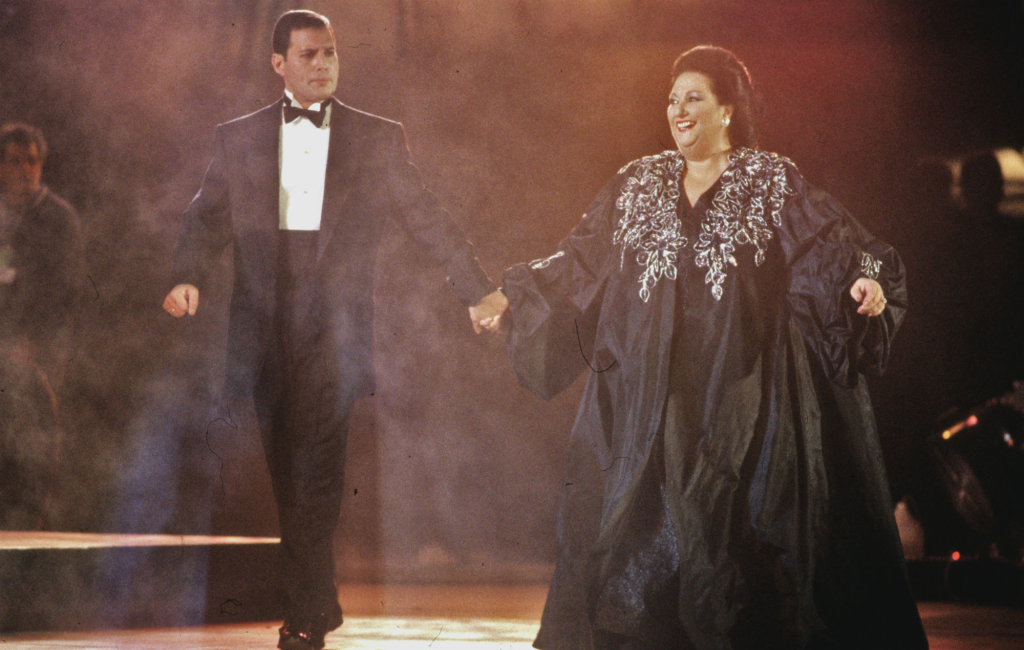
Outside Queen, Freddie Mercury pursued one of the most unexpected collaborations of his career with legendary Spanish soprano Montserrat Caballé.
Their album Barcelona combined rock with classical opera, fulfilling Mercury’s lifelong admiration for operatic music.
The title track, “Barcelona,” became internationally recognized and later gained even greater prominence during the 1992 Summer Olympics in Barcelona.
The collaboration showcased:
- Freddie Mercury’s remarkable vocal versatility
- Caballé’s extraordinary operatic talent
- A seamless blend of classical and contemporary music
- Mercury’s willingness to explore beyond traditional rock
It remains one of the most ambitious crossover projects ever recorded.
Michael Jackson and Freddie Mercury
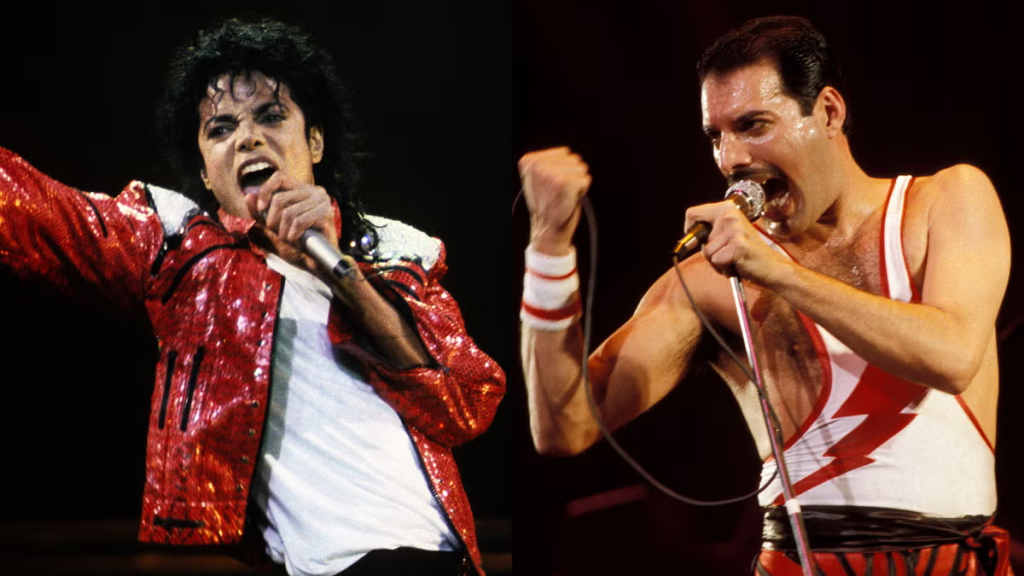
During the early 1980s, Freddie Mercury recorded several demo tracks with Michael Jackson.
Although the sessions never resulted in a completed collaborative album, they demonstrated the mutual respect shared by two of popular music’s greatest performers.
Songs worked on during these sessions included:
- “State of Shock”
- “There Must Be More to Life Than This”
- “Victory” (early collaborative work)
Scheduling conflicts and differing creative priorities ultimately prevented the project from being completed.
Years later, “There Must Be More to Life Than This” was released using Mercury’s original recordings alongside Jackson’s vocals, allowing fans to hear what this remarkable partnership might have become.
George Michael’s Tribute to Freddie Mercury
Although not a formal Queen recording, one of the band’s most memorable collaborations occurred after Freddie Mercury’s passing.
At The Freddie Mercury Tribute Concert in 1992, George Michael performed “Somebody to Love” alongside the remaining members of Queen.
His emotionally charged performance earned widespread praise and demonstrated both his vocal ability and his admiration for Mercury.
Many fans regard it as one of the greatest live tribute performances in rock history.
Elton John and Queen
Another standout moment from the Freddie Mercury Tribute Concert featured Elton John.
He joined the surviving members of Queen and Axl Rose for a powerful performance of “Bohemian Rhapsody.”
Elton John’s piano playing and vocal interpretation honored Mercury while bringing his own distinctive style to one of Queen’s most celebrated songs.
The collaboration symbolized the respect shared among some of the biggest names in rock music.
Annie Lennox and Queen
Singer Annie Lennox also participated in the Freddie Mercury Tribute Concert, delivering an emotional duet of “Under Pressure” with David Bowie.
Although Queen itself took a supporting role during the performance, the collaboration became one of the concert’s defining moments.
It demonstrated the enduring influence of the original recording while introducing the song to new audiences.
Queen and Film Soundtracks
Queen’s collaborations extended beyond individual artists into the world of cinema.
Flash Gordon
The band composed the soundtrack for the science fiction film Flash Gordon, marking one of the earliest examples of a major rock band creating an entire film score.
Rather than producing a conventional soundtrack album, Queen blended:
- Instrumental music
- Rock songs
- Electronic soundscapes
- Dialogue from the film
The project expanded the band’s creative range and demonstrated their versatility as composers.
Highlander
Several songs from A Kind of Magic were written for or inspired by the fantasy film Highlander.
Tracks such as:
- “Princes of the Universe”
- “Who Wants to Live Forever”
- “A Kind of Magic”
became inseparable from the film’s legacy while standing on their own as classic Queen recordings.
Paul Rodgers and Queen+
Following Freddie Mercury’s passing and John Deacon’s retirement, Brian May and Roger Taylor eventually returned to touring with vocalist Paul Rodgers.
Rather than attempting to replace Mercury, the project was presented as Queen + Paul Rodgers, acknowledging the unique identity of the collaboration.
The partnership introduced Queen’s music to new audiences while respecting Mercury’s irreplaceable role within the band.
Studio releases and live performances emphasized both Queen classics and Rodgers’ own musical history.
Adam Lambert and Queen
Beginning in the early 2010s, Brian May and Roger Taylor formed another successful partnership with Adam Lambert.
Performing as Queen + Adam Lambert, the collaboration focused primarily on live performances celebrating Queen’s extensive catalog.
Lambert brought:
- Exceptional vocal range
- Strong stage presence
- Respect for Mercury’s legacy
- His own artistic personality
Rather than imitating Freddie Mercury, Lambert developed his own interpretation of the songs, earning praise from longtime fans and introducing Queen’s music to a younger generation.
Collaborations Within the Band
Some of Queen’s greatest creative partnerships happened between the band members themselves.
Unlike many groups dominated by a single songwriter, Queen encouraged contributions from everyone.
Their collaborative process blended:
- Freddie Mercury’s theatrical vision
- Brian May’s intricate guitar arrangements
- Roger Taylor’s energetic songwriting
- John Deacon’s melodic instincts
This balance of perspectives allowed Queen to experiment freely while maintaining a cohesive sound.
Even when individual members wrote songs independently, the final recordings reflected the input and musicianship of the entire band.
The Power of Creative Partnerships
Queen’s collaborations were relatively rare, but that rarity made each one feel significant. Whether working with legendary performers, visionary producers, or film directors, the band chose partnerships that complemented their creativity rather than overshadowed it.
These collaborations expanded Queen’s musical reach into opera, funk, film scoring, arena rock, and live tribute performances while preserving the distinctive qualities that made the band unique.
Perhaps most importantly, they demonstrated Queen’s openness to new ideas. Even after achieving worldwide success, the band continued to explore fresh creative opportunities with artists from different musical backgrounds.
A Legacy That Continues to Inspire
Queen’s greatest collaborations reveal a band confident enough to share the spotlight when the right opportunity arose. From the unforgettable chemistry of “Under Pressure” with David Bowie to Freddie Mercury’s operatic masterpiece with Montserrat Caballé, these partnerships produced music that remains as compelling today as when it was first recorded.
At the same time, collaborations with producers like Roy Thomas Baker and Mack helped shape the band’s evolving sound, while later partnerships with Paul Rodgers and Adam Lambert ensured Queen’s music continued to thrive on stages around the world.
Together, these musical partnerships highlight another important aspect of Queen’s legacy: a willingness to embrace collaboration without ever losing the distinctive identity that made the band one of the greatest in rock history.