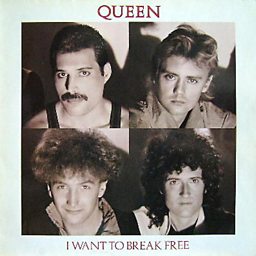
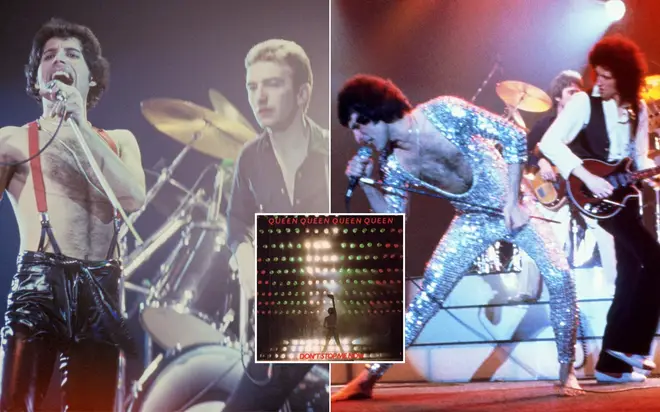
Few bands in rock history have developed a sound as instantly recognizable as Queen. Whether it’s Freddie Mercury’s soaring vocals, Brian May’s orchestral guitar arrangements, Roger Taylor’s powerful drumming, or John Deacon’s melodic bass lines, every element of the band’s music contributed to a style that was both innovative and unmistakably their own.
But Queen’s signature sound wasn’t created by chance. It was the result of years of experimentation, meticulous studio work, technical creativity, and a shared commitment to pushing musical boundaries. Rather than treating the recording studio as simply a place to capture performances, Queen viewed it as an instrument in itself—one that allowed them to transform ambitious ideas into groundbreaking recordings.
Here’s a closer look at the techniques and creative decisions that defined Queen’s extraordinary sound.
Building a Sound Unlike Any Other
From their earliest recordings, Queen wanted to stand apart from other rock bands.
While many groups focused on straightforward guitar-driven songs, Queen embraced complexity without sacrificing memorable melodies. Every member contributed to the creative process, resulting in recordings that felt rich, layered, and remarkably dynamic.
Several elements became central to the band’s identity:
- Multi-layered vocal harmonies
- Orchestral guitar arrangements
- Powerful rhythm sections
- Dramatic song structures
- Innovative studio production
- Fearless experimentation
Together, these components created music that sounded grand whether played through headphones or performed in front of tens of thousands of fans.
Freddie Mercury’s Multi-Layered Vocals
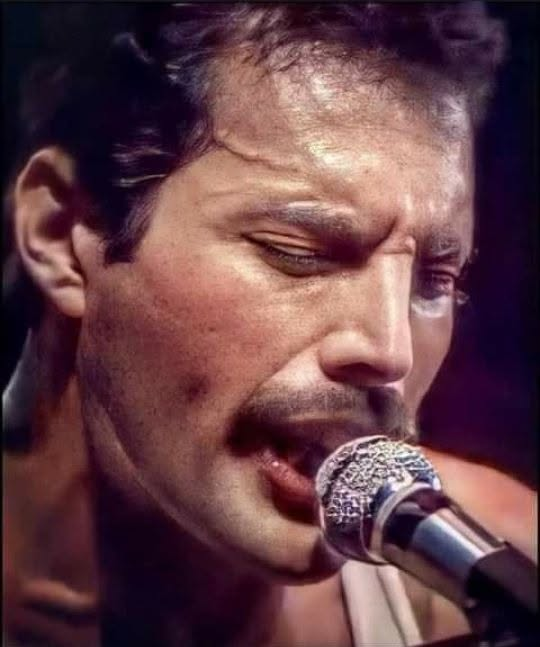
Freddie Mercury possessed one of rock music’s most distinctive voices, but Queen rarely relied on a single vocal track.
Instead, the band built enormous vocal harmonies by recording multiple takes of Freddie, Brian May, and Roger Taylor singing different parts.
These recordings were carefully stacked to create the illusion of a much larger vocal ensemble.
How the Vocal Layering Worked
The band often recorded:
- Lead vocal performances
- High harmonies
- Middle harmonies
- Low harmonies
- Countermelodies
- Choir-style backing vocals
Each layer was recorded separately and blended with exceptional precision.
The result was a vocal sound that felt enormous without requiring outside singers.
Songs such as “Bohemian Rhapsody,” “Somebody to Love,” and “The Prophet’s Song” remain masterclasses in vocal production.
Brian May’s Guitar Orchestra
One of Queen’s defining innovations came from Brian May’s approach to the electric guitar.
Rather than treating it solely as a lead instrument, May often used multiple guitar recordings to imitate the sound of an orchestra.
Instead of relying on synthesizers during the band’s early years, he carefully recorded numerous guitar parts, each performing a different musical role.
Elements of His Guitar Arrangements
May frequently layered:
- Lead melodies
- Rhythm guitars
- Harmonic lines
- Countermelodies
- Sustained notes
- Textural effects
These parts blended into lush arrangements that sounded far larger than a typical rock trio or quartet.
His distinctive guitar tone also played a major role.
Using his handmade Red Special guitar and a unique setup that emphasized clarity and sustain, May produced a sound instantly recognizable to generations of listeners.
Three Voices, One Choir
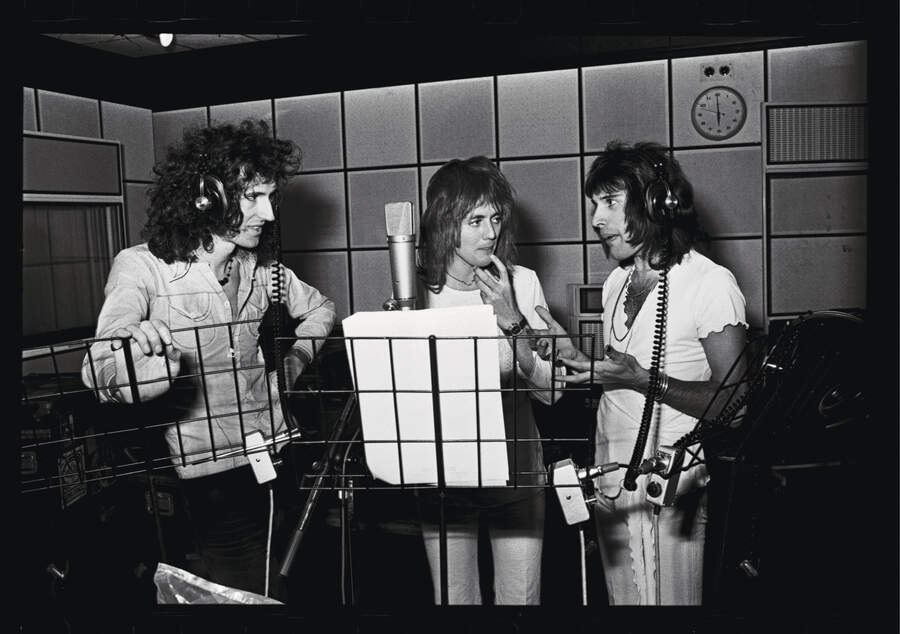
Although Freddie Mercury naturally drew attention as the lead singer, Queen’s vocal sound depended heavily on all three vocalists.
Each brought unique qualities:
Freddie Mercury
- Powerful lead vocals
- Wide emotional range
- Dramatic phrasing
- Exceptional control
Brian May
- Warm, melodic harmonies
- Gentle lead vocals on selected songs
- Rich middle vocal textures
Roger Taylor
- High-register harmonies
- Powerful rock vocals
- Distinctive falsetto
By combining their voices, Queen created harmonies that became one of their defining trademarks.
The careful balance between the three singers gave Queen a vocal richness few bands could match.
John Deacon’s Melodic Bass Playing
John Deacon’s contributions often receive less attention, but his bass playing was essential to Queen’s sound.
Rather than simply following the root notes of guitar chords, Deacon frequently developed melodic bass lines that interacted with the vocals and guitars.
His style emphasized:
- Musical precision
- Groove
- Melodic movement
- Rhythmic flexibility
- Subtle complexity
Songs like “Another One Bites the Dust,” “Dragon Attack,” and “You’re My Best Friend” demonstrate how his bass lines often became memorable hooks themselves.
Recording Without Taking Shortcuts
Queen became known for spending extensive time in the recording studio.
Rather than settling for first takes, they carefully refined every detail until the final recording matched their artistic vision.
Their sessions often included:
- Multiple vocal overdubs
- Numerous guitar layers
- Repeated instrumental takes
- Detailed mixing adjustments
- Careful arrangement revisions
This perfectionist approach contributed to the polished quality of their albums.
The Studio as a Creative Instrument
Many bands viewed the studio as a place to document live performances.
Queen saw something much bigger.
The studio became an extension of the songwriting process.
Rather than asking, “How do we perform this?” they often asked, “What is the most exciting way to create this sound?”
This mindset encouraged experimentation with:
- Tape effects
- Vocal doubling
- Reverse audio
- Echo and delay
- Layered instrumentation
- Creative microphone placement
These techniques expanded what rock recordings could achieve during the 1970s and 1980s.
Blending Genres Through Production
Queen’s production techniques made it possible to combine multiple musical styles within a single song.
For example:
- Rock guitars could sit beside operatic harmonies.
- Gospel-inspired choirs blended naturally with piano ballads.
- Funk bass lines supported hard rock arrangements.
- Classical-inspired structures coexisted with pop melodies.
Because the production remained cohesive, these diverse influences felt natural rather than disconnected.
This versatility became one of Queen’s greatest strengths.
Dynamic Song Structures
Queen rarely followed predictable formulas.
Many of their songs featured multiple musical sections connected into a single composition.
Instead of relying exclusively on verse-chorus patterns, they often incorporated:
- Introductory themes
- Ballad sections
- Instrumental passages
- Tempo changes
- Guitar solos
- Climactic finales
This cinematic approach kept listeners engaged while giving each song a distinctive identity.
“Bohemian Rhapsody” remains the ultimate example, but many other Queen songs also embraced complex structures.
Balancing Precision with Emotion
Despite their technical sophistication, Queen never allowed studio perfection to overshadow emotional expression.
Every recording prioritized feeling as much as accuracy.
Freddie Mercury’s vocals captured vulnerability, triumph, humor, and drama with equal conviction, while Brian May’s expressive guitar playing often served as a second voice within the music.
The band understood that technical excellence mattered most when it enhanced the emotional impact of a song.
Adapting to New Technology
As recording technology evolved, Queen embraced new possibilities while preserving the qualities that made their music distinctive.
During the 1980s, they gradually incorporated:
- Synthesizers
- Digital recording equipment
- Electronic drum sounds
- Advanced mixing techniques
- Modern studio effects
Rather than abandoning their established style, they integrated these tools into their existing musical framework.
Albums such as The Game, The Works, and A Kind of Magic demonstrated how successfully Queen balanced innovation with tradition.
Collaboration Fueled Creativity
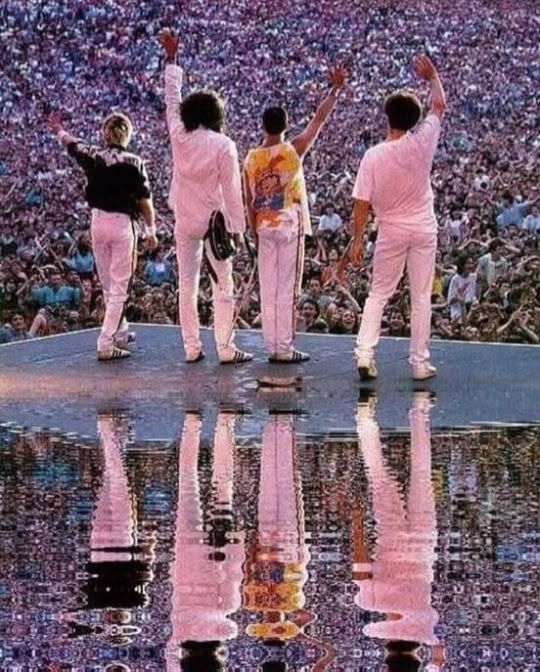
One of the defining features of Queen’s recording process was the collaborative spirit among its members.
Although individual songs often began with one songwriter, every member contributed ideas during recording sessions.
This collaborative approach encouraged:
- Creative problem-solving
- Musical experimentation
- Honest feedback
- Continuous refinement
- Shared artistic ownership
Each member’s strengths complemented the others, allowing Queen to produce recordings that felt greater than the sum of their individual talents.
Influencing Generations of Musicians
Queen’s studio innovations continue to influence artists across countless genres.
Modern producers and musicians frequently draw inspiration from their techniques, including:
- Layered vocal production
- Harmonized guitar arrangements
- Genre-blending compositions
- Cinematic song structures
- Creative use of the recording studio
From rock and pop to metal, progressive music, and film scores, Queen’s approach can still be heard in contemporary recordings.
Their willingness to experiment proved that technical ambition and mainstream appeal could coexist.
A Sound That Stands the Test of Time
Queen’s signature sound wasn’t built around a single instrument or recording trick. It emerged from the seamless combination of Freddie Mercury’s extraordinary vocals, Brian May’s orchestral guitar work, Roger Taylor’s dynamic drumming and harmonies, John Deacon’s melodic bass playing, and a collective passion for innovation.
By embracing vocal layering, intricate arrangements, studio experimentation, and fearless creativity, Queen transformed the recording process into an art form. Every album reflected their commitment to pushing boundaries while crafting songs that remained emotionally engaging and instantly memorable.
Decades after their greatest recordings were made, Queen’s music continues to sound fresh, powerful, and unmistakably unique. Their signature sound remains a testament to what can happen when exceptional musicians combine technical mastery with imagination, proving that true innovation is not about following trends but about creating something entirely your own.