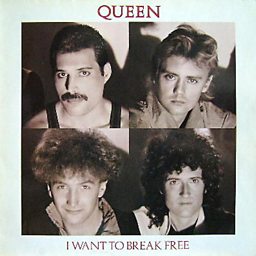
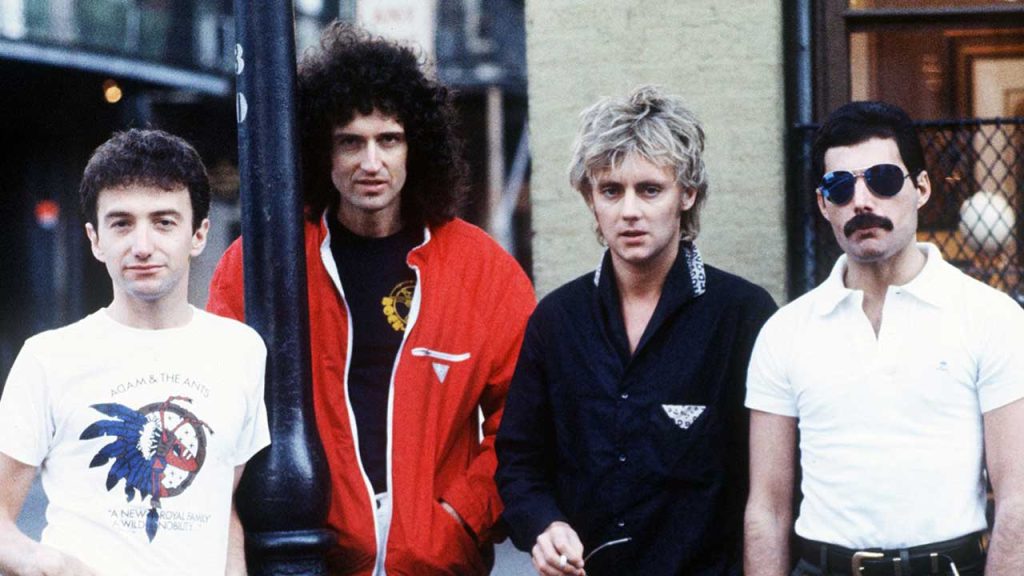
Queen’s rise from a British rock band to a global musical phenomenon is one of the most remarkable stories in popular music history. While many artists achieve success in their home countries, few manage to create a worldwide following that spans generations, languages, and cultures.
From packed stadiums in Europe to legendary performances in South America and enduring popularity across Asia, Queen developed an international appeal that went far beyond traditional rock audiences. Their success was built on unforgettable songwriting, extraordinary live performances, emotional storytelling, and a willingness to connect with listeners everywhere.
The story of Queen’s global journey reveals how a band with roots in British rock became a universal musical force.
Building an International Identity
From the beginning, Queen had qualities that made their music capable of crossing borders.
Unlike bands that depended heavily on local trends, Queen created songs built around universal emotions and powerful musical ideas.
Their international appeal came from several key elements:
- Memorable melodies that listeners could recognize instantly
- Emotional themes involving love, ambition, celebration, and resilience
- Spectacular live performances
- A blend of musical styles that attracted different audiences
- Freddie Mercury’s charismatic stage presence
Queen’s music did not require listeners to understand every lyric to appreciate its energy and emotion. Their performances communicated through melody, rhythm, and visual spectacle.
Early Success Beyond the United Kingdom
Queen’s first major international breakthrough came during the mid-1970s.
After releasing albums such as Sheer Heart Attack and A Night at the Opera, the band began attracting attention outside Britain.
The success of “Killer Queen” introduced Queen to audiences in multiple countries, while “Bohemian Rhapsody” transformed them from a successful rock group into a worldwide sensation.
The song’s unusual structure initially challenged expectations, but its dramatic storytelling and unforgettable vocal sections connected with listeners around the world.
Its international success demonstrated that audiences were willing to embrace ambitious and unconventional music.
Queen’s Impact Across Europe

Europe became one of Queen’s strongest regions throughout their career.
The band’s theatrical style, powerful vocals, and dramatic performances connected especially well with European audiences who appreciated artistic experimentation.
Countries across the continent embraced Queen’s music through:
- Album sales
- Radio airplay
- Television appearances
- Large-scale concerts
- Festival performances
Their European popularity continued growing through the late 1970s and 1980s, with songs like:
- “We Will Rock You”
- “We Are the Champions”
- “Another One Bites the Dust”
- “Radio Ga Ga”
becoming widely recognized anthems.
Germany: A Strong Rock Following
Germany became one of Queen’s most loyal international markets.
The band’s combination of technical musicianship and powerful live performances appealed to German rock audiences, who valued musical precision and ambitious arrangements.
Queen’s concerts in Germany regularly attracted large crowds, and their albums maintained strong popularity throughout the decades.
The country’s appreciation for rock music helped establish Queen as one of the most respected international acts in the region.
France and Southern Europe
Queen also developed strong connections with audiences in France, Italy, Spain, and other European countries.
Freddie Mercury’s theatrical approach and the band’s dramatic compositions resonated with audiences who appreciated performance-driven music.
Songs that emphasized emotion and spectacle often translated especially well in these markets.
The band’s ability to move between rock, opera, pop, and ballads allowed them to appeal to listeners with diverse musical tastes.
The United States: Breaking Through a Competitive Market
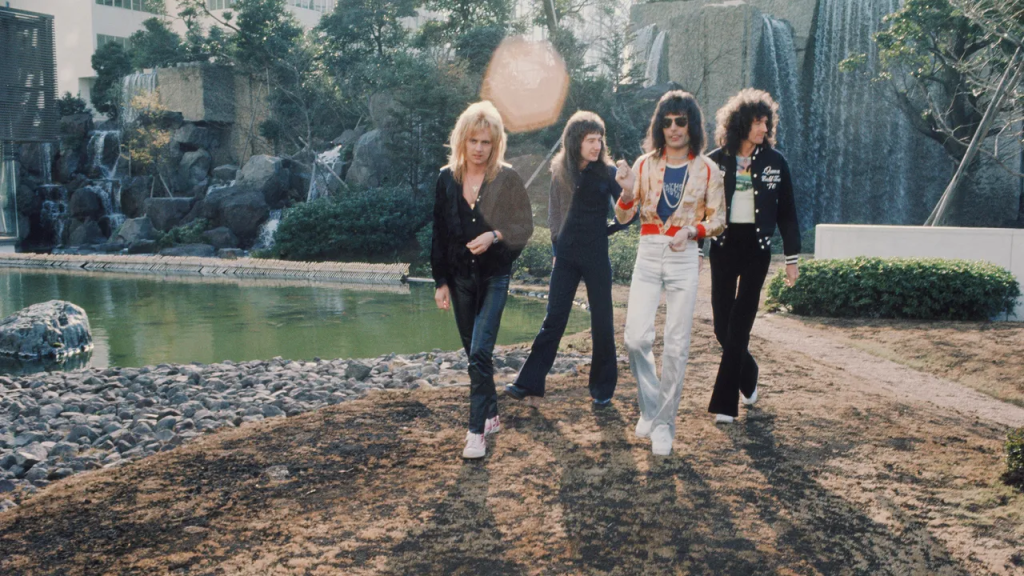
The United States represented one of Queen’s biggest challenges and greatest achievements.
The American music industry was highly competitive, with many established rock acts dominating radio and touring.
Queen initially built their audience through relentless touring and impressive live performances.
Their breakthrough came with:
- “Killer Queen”
- “Bohemian Rhapsody”
- A Night at the Opera
- News of the World
The success of “Bohemian Rhapsody” was especially significant because it proved that American audiences were willing to embrace a song that broke conventional radio formulas.
Queen’s stadium performances in North America further strengthened their reputation as one of the world’s greatest live bands.
The Power of Touring in America
Queen understood that international success required more than releasing popular records.
They invested heavily in live performances, bringing their theatrical shows to American audiences.
Their concerts featured:
- Massive production elements
- Audience interaction
- Complex musical arrangements
- Freddie Mercury’s commanding stage presence
These performances helped convert casual listeners into lifelong fans.
Queen’s Historic Connection with Japan
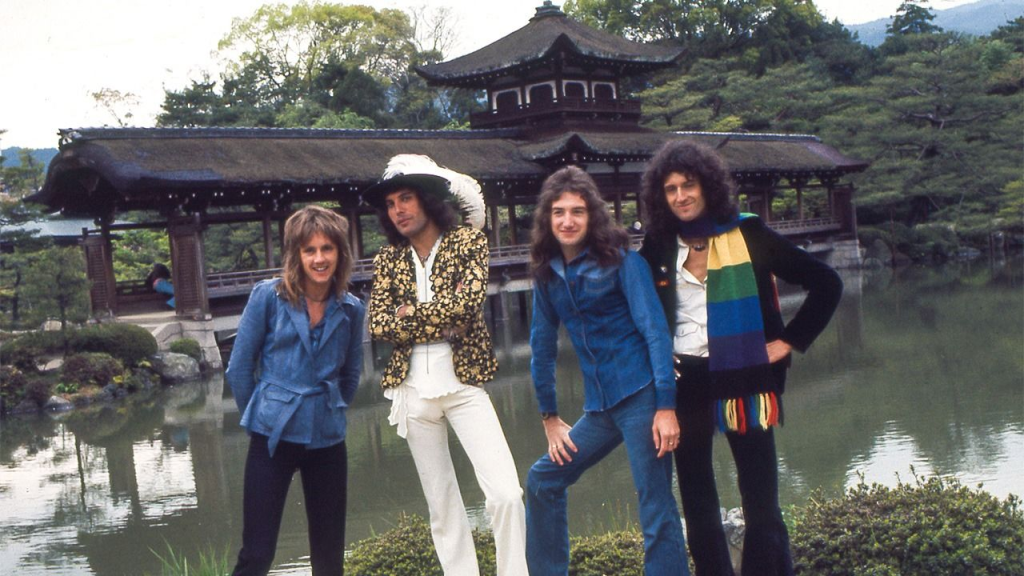
Japan became one of Queen’s earliest and most passionate international fan bases.
The band’s popularity in Japan developed rapidly after their first visit in the 1970s.
Japanese audiences embraced Queen’s:
- Musical craftsmanship
- Visual style
- Technical excellence
- Individual personalities
The reception was so enthusiastic that the band members were reportedly surprised by the intensity of their welcome.
Japan played an important role in confirming Queen’s status as an international phenomenon before their biggest worldwide successes arrived.
Why Queen Connected With Japanese Fans
Several aspects of Queen’s music appealed strongly to Japanese audiences:
- Appreciation for musicianship
- Love of melodic songwriting
- Interest in theatrical performance
- Respect for artistic dedication
Queen’s attention to detail and commitment to quality aligned with values often appreciated by Japanese music fans.
Queen and Latin America: A Cultural Phenomenon
One of the most extraordinary chapters in Queen’s international story occurred in Latin America.
The region embraced the band with extraordinary enthusiasm, particularly during their 1981 tour.
Their concerts attracted enormous crowds and demonstrated the power of Queen’s music beyond traditional English-speaking markets.
Argentina and Brazil
In countries such as Argentina and Brazil, Queen became more than a successful foreign band—they became a cultural phenomenon.
Fans connected with:
- Freddie Mercury’s emotional expression
- The band’s powerful live shows
- Songs about unity and determination
- Their larger-than-life image
The band’s performances in South America remain among the most memorable moments of their touring history.
The legendary Rock in Rio appearance in 1985 further strengthened Queen’s connection with Brazilian audiences.
Music Beyond Language Barriers
One of Queen’s greatest achievements was proving that music could connect people even when language was a barrier.
Many fans around the world did not speak English fluently, yet they could still participate in Queen’s concerts by singing choruses, responding to rhythms, and sharing emotional moments.
Songs like:
- “We Are the Champions”
- “Love of My Life”
- “Radio Ga Ga”
became international communal experiences.
Africa and the Legendary Live Aid Performance
Queen’s performance at Live Aid in 1985 became one of the most celebrated moments in music history.
Held at Wembley Stadium, the event was broadcast internationally and introduced Queen’s live power to millions of viewers around the world.
Freddie Mercury’s ability to engage a massive audience in a short performance demonstrated why Queen had become such a successful global touring act.
The performance reinforced their reputation as one of the greatest live bands of all time.
Continuing Popularity in Asia
Queen’s popularity has remained strong in Asian countries for decades.
Their music continues to reach new generations through:
- Film exposure
- Streaming platforms
- Tribute performances
- Social media
- Music education
The band’s emphasis on melody and musicianship has helped their songs remain relevant across changing musical trends.
The Role of Film and New Generations
The release of the biographical film Bohemian Rhapsody introduced Queen’s story and music to millions of younger listeners worldwide.
The renewed interest demonstrated that Queen’s appeal was not limited to fans who experienced the band during their original era.
New audiences discovered:
- Freddie Mercury’s artistry
- The band’s creative process
- Their greatest songs
- Their remarkable live performances
The film helped create another wave of international appreciation.
Why Queen Became a Global Band
Queen’s worldwide success was not based on a single hit or market strategy. It came from a combination of artistic qualities that appealed across cultures.
Universal Songs
Queen wrote music about emotions that everyone could understand.
Themes of love, struggle, confidence, celebration, and individuality gave their songs international relevance.
Unforgettable Performances
Freddie Mercury’s ability to communicate with audiences transformed concerts into shared experiences.
Musical Diversity
By combining rock, opera, funk, pop, and classical influences, Queen reached listeners with different musical preferences.
Visual Identity
Their bold fashion, theatrical performances, and memorable imagery made the band recognizable worldwide.
A Legacy Without Borders
Queen’s journey from a British rock group to a global phenomenon shows the extraordinary power of music to connect people. Their success across Europe, North America, Asia, and Latin America proved that great songs can transcend geography and language.
The band’s international appeal came from more than commercial success. Queen created moments that brought people together—whether thousands of fans singing in a stadium, millions watching a televised performance, or new listeners discovering their music decades later.
Their ability to unite audiences around the world remains one of the most remarkable achievements in rock history. Queen did not simply become famous in different countries; they became part of the cultural soundtrack of generations everywhere.