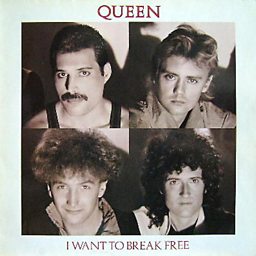
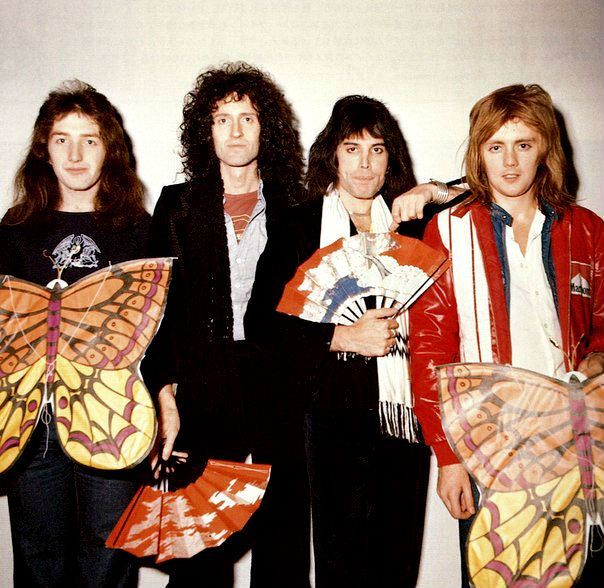
Queen was never just a band that performed music. From the very beginning, they understood that a live performance was a complete experience involving sound, visuals, personality, and theatrical expression. While their songs became legendary, their fashion choices also played a crucial role in shaping the band’s identity.
From glittering 1970s glam rock influences to Freddie Mercury’s iconic stage outfits, Queen used clothing as a form of storytelling. Their costumes helped communicate confidence, drama, humor, and individuality while reinforcing the idea that a concert should feel like an unforgettable event.
Fashion was not simply decoration for Queen—it was another instrument in their creative arsenal.
The Connection Between Music and Visual Identity
During the 1970s, rock music was becoming increasingly visual. Artists were appearing on television, performing in larger venues, and developing recognizable images that extended beyond their recordings.
Queen embraced this cultural shift and understood that audiences remembered what they saw as much as what they heard.
The band’s approach to fashion reflected several important ideas:
- Stage clothing should enhance performance
- Artists should create memorable characters
- Visual presentation should match musical ambition
- Individuality was more valuable than following trends
Rather than dressing like a typical rock band, Queen created a visual world that matched their dramatic sound.
The Early Years: Glam Rock Influence and Experimentation
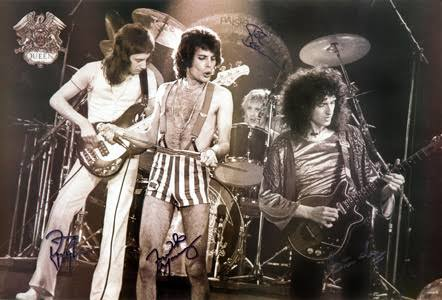
When Queen emerged in the early 1970s, glam rock was influencing British music culture.
Artists were experimenting with:
- Bold colors
- Makeup
- Platform shoes
- Shimmering fabrics
- Gender-fluid fashion
- Theatrical presentation
Queen adopted some elements of this movement while developing a style that was uniquely their own.
Freddie Mercury especially embraced the freedom of glam fashion, using clothing to express confidence and creativity rather than simply follow a trend.
Early Freddie Mercury Style
During Queen’s first years, Freddie’s stage appearance often included:
- Flowing shirts
- Satin clothing
- Tight-fitting trousers
- Leather pieces
- Jewelry
- Long hair
These outfits helped establish his commanding stage presence and separated Queen from more traditional rock groups.
His fashion choices reflected the same ambition found in the band’s music: bigger, more dramatic, and impossible to ignore.
Zandra Rhodes and Queen’s Artistic Image
One of the most important influences on Queen’s early visual identity came from fashion designer Zandra Rhodes.
Her designs helped shape some of Freddie Mercury’s most memorable early looks, combining theatrical elements with a sense of elegance.
The collaboration reflected Queen’s belief that fashion could function as an extension of artistic expression.
The clothing was not designed merely to look impressive—it helped create a larger-than-life performance persona.
The Rise of the Iconic White Satin Look
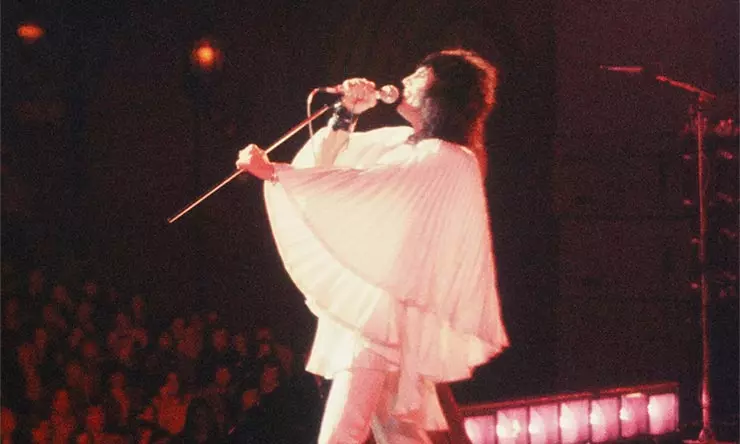
One of Freddie Mercury’s most recognizable early costumes was the flowing white satin outfit associated with Queen’s 1970s performances.
The look featured:
- Loose, dramatic silhouettes
- Elegant movement
- A theatrical presence
- A contrast between softness and power
It complemented songs that emphasized emotion and grandeur, reinforcing Freddie’s image as both a rock frontman and a theatrical performer.
The Transition from Glam Rock to Stadium Style
As Queen moved into larger venues, their fashion evolved.
The elaborate glam influences of the early 1970s gradually gave way to clothing designed for massive stadium performances.
Freddie began favoring:
- Fitted leather jackets
- Military-inspired designs
- Sleeveless tops
- Jeans
- Armbands
- Boots
These outfits allowed greater movement while maintaining his commanding visual presence.
The change reflected Queen’s evolution from a theatrical club band into a global stadium act.
The Famous Military-Inspired Look
One of Freddie Mercury’s most memorable fashion eras involved military-inspired jackets.
These outfits combined elements of:
- Historical uniforms
- Rock rebellion
- Theater costumes
- Personal confidence
The style suited Queen’s increasingly powerful live shows, particularly during performances of songs like “We Will Rock You” and “We Are the Champions.”
The commanding appearance reinforced Freddie’s role as a performer who could lead tens of thousands of people simultaneously.
The 1980s: Simplicity, Confidence, and Reinvention
By the 1980s, Queen’s fashion became less focused on elaborate costumes and more centered around Freddie Mercury’s physical presence and charisma.
The band had reached a level of fame where the members themselves had become the visual identity.
Freddie’s wardrobe shifted toward:
- Tank tops
- Leather jackets
- Denim
- Athletic clothing
- Shorter hair
- Minimal accessories
This style represented a new era.
Instead of relying on dramatic outfits, Freddie emphasized movement, confidence, and direct connection with audiences.
The Live Aid Era: The Power of Simplicity
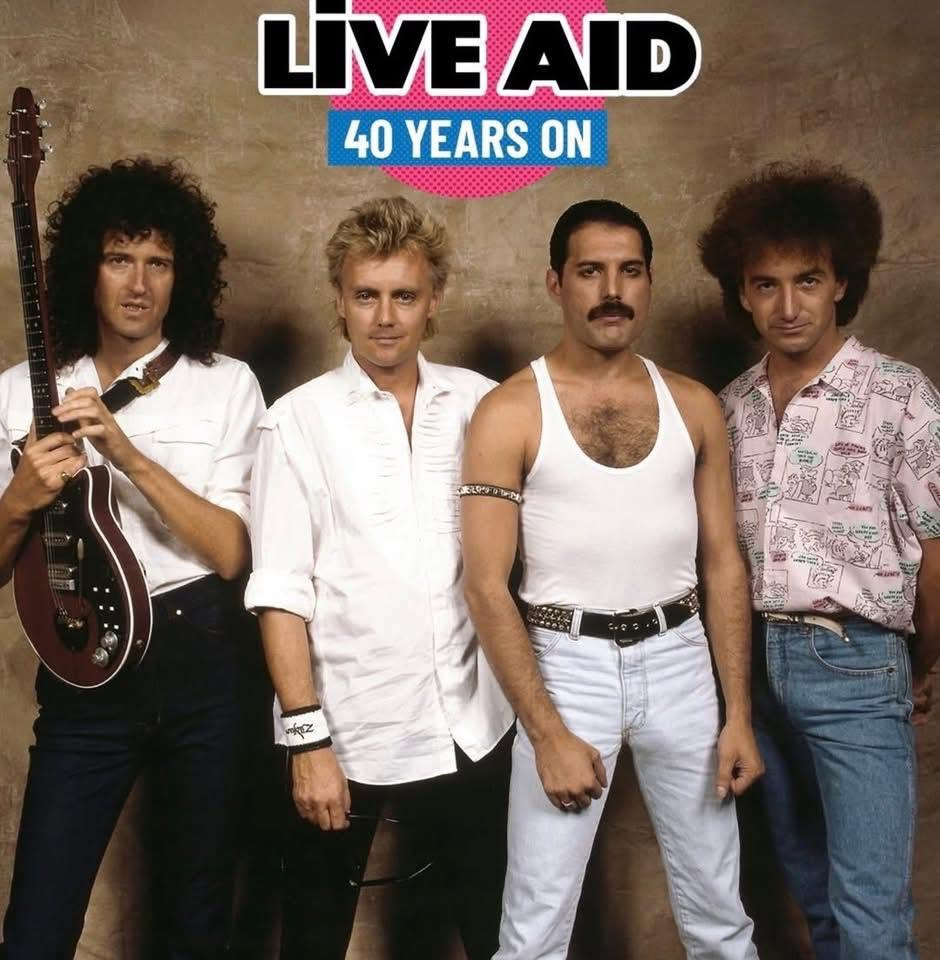
Queen’s legendary performance at Live Aid in 1985 demonstrated how effective a simple visual approach could be.
Freddie Mercury wore:
- A white tank top
- Jeans
- A studded wristband
- Sneakers
The outfit was uncomplicated, but his performance transformed it into one of the most recognizable looks in rock history.
The moment proved that fashion alone did not create a stage icon. The combination of clothing, personality, confidence, and performance ability created the lasting image.
Brian May’s Distinctive Style
While Freddie Mercury received the most attention for fashion, the other members of Queen also developed recognizable identities.
Brian May maintained a more understated appearance throughout much of the band’s career.
His style often included:
- Long curly hair
- Casual shirts
- Jeans
- Comfortable stage clothing
This simplicity allowed his guitar playing to remain the focus.
His appearance matched his musical personality: thoughtful, distinctive, and effortlessly recognizable.
Roger Taylor and John Deacon: Individuality Without Excess
Roger Taylor and John Deacon also contributed to Queen’s overall image.
Roger Taylor often embraced a rock-oriented style featuring:
- Leather clothing
- Denim
- Bold hairstyles
- Energetic stage looks
John Deacon generally preferred a more relaxed and practical appearance.
His clothing choices reflected his quieter personality, allowing his musicianship rather than his image to define him.
The contrast between the members’ styles strengthened Queen’s identity as a group of distinct personalities.
Fashion as Part of the Performance
For Queen, costumes were never separate from the music.
Every visual choice served a purpose.
Stage fashion helped:
- Establish mood
- Enhance storytelling
- Create memorable moments
- Communicate personality
- Strengthen audience connection
A dramatic costume could transform a song into an event.
When Freddie Mercury appeared on stage wearing a particular outfit, audiences immediately understood that they were about to experience something theatrical.
Breaking Expectations Through Fashion
Queen’s approach to fashion also challenged traditional ideas about masculinity, rock stardom, and performance.
Freddie Mercury especially pushed boundaries by combining:
- Strength and elegance
- Masculinity and theatricality
- Confidence and vulnerability
- Rock attitude and artistic sophistication
His willingness to experiment inspired countless performers who followed.
Queen demonstrated that authenticity did not require fitting into a specific image—it required creating an identity that felt genuine.
The Influence of Queen’s Fashion on Modern Artists
Queen’s visual legacy continues to influence musicians today.
Modern performers often borrow elements of Queen’s approach, including:
- The use of costumes as storytelling tools
- Dramatic stage transformations
- Bold personal branding
- The combination of music and theater
Artists across pop, rock, and performance-based music have adopted the idea that concerts should be immersive experiences rather than simple song presentations.
Why Queen’s Fashion Remains Iconic
Many stage costumes become memorable only because of nostalgia. Queen’s fashion has lasted because it was connected to something deeper.
Their clothing represented:
- Creativity
- Confidence
- Freedom of expression
- Musical ambition
- The courage to stand apart
The outfits worked because they reflected the personalities of the people wearing them.
Freddie Mercury’s most famous looks were not simply costumes—they were extensions of his artistic identity.
A Legacy Beyond Music
Queen’s influence extends far beyond their recordings. Their fashion choices helped redefine what a rock band could look like and how performers could use visual presentation to connect with audiences.
From the glamorous early years to the stripped-down confidence of the 1980s, Queen’s style evolved alongside their music. Every era introduced a new visual chapter, reflecting the band’s creativity and willingness to challenge expectations.
Their greatest achievement was not simply creating memorable outfits. It was proving that fashion, performance, and music could combine to create something larger than any one element alone.
Queen’s stage costumes remain iconic because they captured the same qualities that defined the band itself: imagination, individuality, and the belief that true artistry should never be limited by convention.